Showing posts with label Design Car. Show all posts

Saturday, September 18, 2010

SAAB Spyker 9+ Tribute - SAAB Supercar

Paying his tribute to the SAAB Spyker Automobiles, Swedish designer Eduard Gray has come up with a vehicle concept called the “SAAB Spyker 9+ Tribute” that is not only pleasant to watch but to drive as well. Combining the elements of a mid-engined SAAB with the Spyker platform, the new supercar featuring low down aerodynamics will possibly generate power from an Audi-sourced V8 engine. Touting a big windshield that extends to complete the roof, the Saab Spyker 9+ Tribute allows a wider view to the commuters. His long, lean two-door Saab Spyker 9+ concept car imagines an evolution of Saab's Aero-X enhanced by some of Spyker's exoticism.
SAAB Spyker 9+ Tribute
The ink is barely dry on Dutch supercar marque Spyker’s deal to buy Saab, but speculation as to what sort of alluring automotive offspring might arise from the union has already begun. Eduard Gray, an industrial designer educated at Coventry University in the UK and now based in Trollhättan, Sweden, has come up with a concrete vision.
SAAB Spyker 9+ Tribute
The union of Saab and Spyker presents a unique opportunity to create a design that takes the best of each brand and distills their qualities into a single product," he said. Gray, who is Dutch and English, points out that a truly unique car can be assembled with the low-slung mid-engine Spyker supercar chassis and the design language at Saab. Spyker lends us its supercar chassis with a mid-mounted engine and low down aerodynamics while Saab contributes with the style, character and engineering making for a design that is as pleasant to look at as it is to drive.
SAAB Spyker 9+ Tribute
Indeed, his six drawings of the Saab Spyker 9+ Tribute shows elements of both companies. Gray calls the work "a quick expression of my optimism for the future of the brand."
SAAB Spyker 9+ Tribute
The distinctly Scandinavian design features a Spyker chassis with a mid-mounted engine and low down aerodynamics, including a system to reduce friction in straight line driving whilst increasing traction in cornering and braking. An enormous panoramic glass roof gives it something of a targa feel as well. Envisioned as a 2+2 model in the storied GT tradition, engine-wise it’s speculated to house a V6 bi-turbo capable of producing over 600 hp, perhaps powered purely by ethanol – we’re talking about the future after all.

SAAB Spyker 9+ Tribute - SAAB Supercar

Paying his tribute to the SAAB Spyker Automobiles, Swedish designer Eduard Gray has come up with a vehicle concept called the “SAAB Spyker 9+ Tribute” that is not only pleasant to watch but to drive as well. Combining the elements of a mid-engined SAAB with the Spyker platform, the new supercar featuring low down aerodynamics will possibly generate power from an Audi-sourced V8 engine. Touting a big windshield that extends to complete the roof, the Saab Spyker 9+ Tribute allows a wider view to the commuters. His long, lean two-door Saab Spyker 9+ concept car imagines an evolution of Saab's Aero-X enhanced by some of Spyker's exoticism.
SAAB Spyker 9+ Tribute
The ink is barely dry on Dutch supercar marque Spyker’s deal to buy Saab, but speculation as to what sort of alluring automotive offspring might arise from the union has already begun. Eduard Gray, an industrial designer educated at Coventry University in the UK and now based in Trollhättan, Sweden, has come up with a concrete vision.
SAAB Spyker 9+ Tribute
The union of Saab and Spyker presents a unique opportunity to create a design that takes the best of each brand and distills their qualities into a single product," he said. Gray, who is Dutch and English, points out that a truly unique car can be assembled with the low-slung mid-engine Spyker supercar chassis and the design language at Saab. Spyker lends us its supercar chassis with a mid-mounted engine and low down aerodynamics while Saab contributes with the style, character and engineering making for a design that is as pleasant to look at as it is to drive.
SAAB Spyker 9+ Tribute
Indeed, his six drawings of the Saab Spyker 9+ Tribute shows elements of both companies. Gray calls the work "a quick expression of my optimism for the future of the brand."
SAAB Spyker 9+ Tribute
The distinctly Scandinavian design features a Spyker chassis with a mid-mounted engine and low down aerodynamics, including a system to reduce friction in straight line driving whilst increasing traction in cornering and braking. An enormous panoramic glass roof gives it something of a targa feel as well. Envisioned as a 2+2 model in the storied GT tradition, engine-wise it’s speculated to house a V6 bi-turbo capable of producing over 600 hp, perhaps powered purely by ethanol – we’re talking about the future after all.
Saturday, September 4, 2010

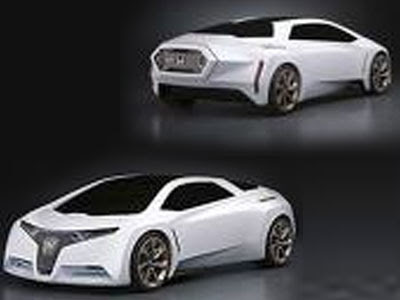
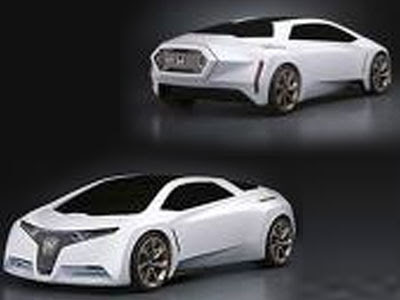
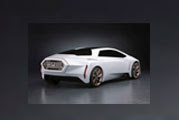
Honda FC Sport Hidrogen Fuel Cell The fastest Sports Cars


Honda FC Sport Fuel Cell


The FC Sport can be summed up like this: Imagine beating your best lap time while hearing nothing but the tires rubbing the tarmac and the quiet buzz of the high-torque electric motors. Picture a true no-holds-barred supercar with all the speed, handling and sleek looks of today's fastest sports cars, yet without the noise, heat, vibration and emissions of the internal-combustion engine.
Built as a design study, the FC Sport demonstrates Honda’s vision for making environmentally responsible vehicles that are also fun to drive. The "FC" stands for "Fuel Cell" as in hydrogen fuel cell—the same technology powering the FCX Clarity. With a 3-seat, driver-centered cockpit, a fuel cell powerplant opens the door for unprecedented engineering flexibility, allowing for a lower center gravity than any modern, piston-engined sports car. The FC Sport is symbolic of a future in which alternative fuel and zero emissions will rule the sports car world.

Honda FC Sport Hidrogen Fuel Cell The fastest Sports Cars


Honda FC Sport Fuel Cell


The FC Sport can be summed up like this: Imagine beating your best lap time while hearing nothing but the tires rubbing the tarmac and the quiet buzz of the high-torque electric motors. Picture a true no-holds-barred supercar with all the speed, handling and sleek looks of today's fastest sports cars, yet without the noise, heat, vibration and emissions of the internal-combustion engine.
Built as a design study, the FC Sport demonstrates Honda’s vision for making environmentally responsible vehicles that are also fun to drive. The "FC" stands for "Fuel Cell" as in hydrogen fuel cell—the same technology powering the FCX Clarity. With a 3-seat, driver-centered cockpit, a fuel cell powerplant opens the door for unprecedented engineering flexibility, allowing for a lower center gravity than any modern, piston-engined sports car. The FC Sport is symbolic of a future in which alternative fuel and zero emissions will rule the sports car world.

Sunday, August 22, 2010

MG Zero Cars Sporty

The MG Zero Concept has been unveiled to the world's media as one of the stars of the 2010 Beijing Automotive Show that could preview a production model planned for market launch in 2011, now one of the world's most important automotive events. The MG Zero Design car has been developed by MG Global Design team, led by British MG Design Director Anthony (Tony) Williams-Kenny, based in Birmingham.
MG Zero Design Cars
At around 4m in length, the MG Zero concept previews the design direction of the brand and demonstrates how MG can expand into this high- volume sector of the market. MG Zero reflects the latest trends in the market for vehicle size, styling and technology and is designed to show how MG will offer products that will appeal to a wide audience across the global market.
MG Zero Design also demonstrates the design and engineering capabilities of SAIC by showcasing a number of innovative features. The bold interior has clean and simple lines with high contrast flashes of accent colour. It uses the latest technology touch screens to allow occupants to interact with the world around them and features a striking 'floating console' design around the driver.
The high-tech materials are draw inspiration from ultra high-performance sports equipment and there is highly innovative use of interior lighting features to create real emotion in the cabin. The bold red-coloured illumination adds a touch of drama.
Commenting on the exterior style, Design Director Tony Williams said " This concept shows a bold, individual soul. The bonnet is formed around the famous octagonal badge, the graphics flow into striking lamps and the large lower grille completes the confident, sporty character. The body-side has a strong shoulder, a dynamic scalloped feature in the doors and flared arches to give a wide stance and strong road presence. The feature lines have been designed to give a strong relationship to the wheel arch demonstrating the fun nature of the cars dynamics."
MG Zero Design also explores the integration of the latest communications technology in the vehicle and in addition to the interior systems, it features a fun communications system on the exterior of the rear!
MG hasn't said much about the vehicle's details, including powerplant options, fuel economy or when we might expect to see a production version crop up. While we aren't exactly smitten with the car's nose, the rest of the design would do well in a segment dominated by the drab. Though concrete information is suspiciously absent at the moment, the company says the Zero should be a clear indication of where the brand is headed in the coming years.
Guy Jones, MG Motor UK Sales and Marketing Director summarised by saying "MG Zero is crucial to the development of the brand globally, as it gives clear direction for the future beyond the current products. We are all proud to see our British-designed vehicle wearing the MG badge creating such an impact in Beijing. With the MG TF back in production in Birmingham, sales increasing and the MG 6 coming at the end of 2010, the MG Zero Concept has come at the perfect time to build further awareness and interest in the brand here in the UK."
No details about its powertrain have been revealed but we can envisage a production version being powered by a range of fuel efficient four-cylinder engines, perhaps even with a turbocharger for a high-performance hot hatch model.
MG is reportedly working on several new models including a replacement for the TF roadster, as well as a sports coupe and a compact sedan.

MG Zero Cars Sporty

The MG Zero Concept has been unveiled to the world's media as one of the stars of the 2010 Beijing Automotive Show that could preview a production model planned for market launch in 2011, now one of the world's most important automotive events. The MG Zero Design car has been developed by MG Global Design team, led by British MG Design Director Anthony (Tony) Williams-Kenny, based in Birmingham.
MG Zero Design Cars
At around 4m in length, the MG Zero concept previews the design direction of the brand and demonstrates how MG can expand into this high- volume sector of the market. MG Zero reflects the latest trends in the market for vehicle size, styling and technology and is designed to show how MG will offer products that will appeal to a wide audience across the global market.
MG Zero Design also demonstrates the design and engineering capabilities of SAIC by showcasing a number of innovative features. The bold interior has clean and simple lines with high contrast flashes of accent colour. It uses the latest technology touch screens to allow occupants to interact with the world around them and features a striking 'floating console' design around the driver.
The high-tech materials are draw inspiration from ultra high-performance sports equipment and there is highly innovative use of interior lighting features to create real emotion in the cabin. The bold red-coloured illumination adds a touch of drama.
Commenting on the exterior style, Design Director Tony Williams said " This concept shows a bold, individual soul. The bonnet is formed around the famous octagonal badge, the graphics flow into striking lamps and the large lower grille completes the confident, sporty character. The body-side has a strong shoulder, a dynamic scalloped feature in the doors and flared arches to give a wide stance and strong road presence. The feature lines have been designed to give a strong relationship to the wheel arch demonstrating the fun nature of the cars dynamics."
MG Zero Design also explores the integration of the latest communications technology in the vehicle and in addition to the interior systems, it features a fun communications system on the exterior of the rear!
MG hasn't said much about the vehicle's details, including powerplant options, fuel economy or when we might expect to see a production version crop up. While we aren't exactly smitten with the car's nose, the rest of the design would do well in a segment dominated by the drab. Though concrete information is suspiciously absent at the moment, the company says the Zero should be a clear indication of where the brand is headed in the coming years.
Guy Jones, MG Motor UK Sales and Marketing Director summarised by saying "MG Zero is crucial to the development of the brand globally, as it gives clear direction for the future beyond the current products. We are all proud to see our British-designed vehicle wearing the MG badge creating such an impact in Beijing. With the MG TF back in production in Birmingham, sales increasing and the MG 6 coming at the end of 2010, the MG Zero Concept has come at the perfect time to build further awareness and interest in the brand here in the UK."
No details about its powertrain have been revealed but we can envisage a production version being powered by a range of fuel efficient four-cylinder engines, perhaps even with a turbocharger for a high-performance hot hatch model.
MG is reportedly working on several new models including a replacement for the TF roadster, as well as a sports coupe and a compact sedan.

Thursday, August 19, 2010

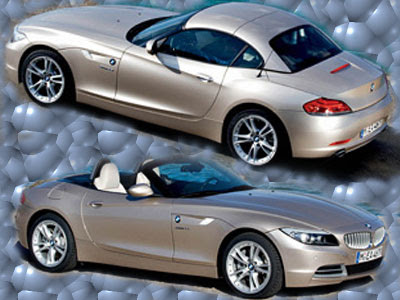
Z4 Roadster BMW Design Car


Z4 Roadster BMW Design Car


2010 BMW Z4 Roadster is the first all-new, top-to-bottom redesign of the Z4 model which was originally launched in 2002.
The 2010 Z4 has a sleeker profile and more subtle "flame surfacing" body lines than the previous model. In general the car has a more balanced and matured appearance to it. That's not to say the roadster has lost any of its visual appeal, it's just been refined and tweaked to fit better with the current BMW styling direction.
The front end of the 2010 BMW Z4 has undergone the most obvious transformation. The headlights are thinner and sweep back further into the wheel arches, and the trademark BMW kidney grilles have been elongated to better match the headlights. Down the sides the controversial styling slash which intersected the fender mounted BMW badge has been replaced by a more conventional panel. The BMW badge is now fitted just forward of the doors and adjacent to the side indicators which are cleverly integrated into the metalwork.
Unlike the original Z4 Roadster which used a fabric roof, the 2010 model is fitted with a retractable metal roof which folds away neatly into the rear storage area. 20 seconds is all it takes for the roof to electronically raise or lower itself.
The 2010 BMW Z4 is offered with a choice of three different engine options. The Z4 sDrive23i model is equipped with a 2.5 litre inline 6 cylinder which develops 204 horsepower. The Z4 sDrive30i is fitted with a 258 horsepower / 228 lb-ft of torque naturally aspirated 3.0 litre 6 cylinder. The top level Z4 is the sDrive35i version which is powered by a twin-turbocharged, 3.0 litre, inline 6 cylinder which pumps out 306 horsepower. With this engine the Z4 can hit 62 mph in just 5.1 seconds. The Z4 can be fitted with either a 6 speed manual gearbox or a 7 speed dual-clutch transmission.

Z4 Roadster BMW Design Car


Z4 Roadster BMW Design Car


2010 BMW Z4 Roadster is the first all-new, top-to-bottom redesign of the Z4 model which was originally launched in 2002.
The 2010 Z4 has a sleeker profile and more subtle "flame surfacing" body lines than the previous model. In general the car has a more balanced and matured appearance to it. That's not to say the roadster has lost any of its visual appeal, it's just been refined and tweaked to fit better with the current BMW styling direction.
The front end of the 2010 BMW Z4 has undergone the most obvious transformation. The headlights are thinner and sweep back further into the wheel arches, and the trademark BMW kidney grilles have been elongated to better match the headlights. Down the sides the controversial styling slash which intersected the fender mounted BMW badge has been replaced by a more conventional panel. The BMW badge is now fitted just forward of the doors and adjacent to the side indicators which are cleverly integrated into the metalwork.
Unlike the original Z4 Roadster which used a fabric roof, the 2010 model is fitted with a retractable metal roof which folds away neatly into the rear storage area. 20 seconds is all it takes for the roof to electronically raise or lower itself.
The 2010 BMW Z4 is offered with a choice of three different engine options. The Z4 sDrive23i model is equipped with a 2.5 litre inline 6 cylinder which develops 204 horsepower. The Z4 sDrive30i is fitted with a 258 horsepower / 228 lb-ft of torque naturally aspirated 3.0 litre 6 cylinder. The top level Z4 is the sDrive35i version which is powered by a twin-turbocharged, 3.0 litre, inline 6 cylinder which pumps out 306 horsepower. With this engine the Z4 can hit 62 mph in just 5.1 seconds. The Z4 can be fitted with either a 6 speed manual gearbox or a 7 speed dual-clutch transmission.

Monday, August 9, 2010

Type Greats Modern Design Aetek FYK futuristic concept car

Type Greats Modern Design Aetek FYK futuristic concept carCool Modern Design Aetek FYK Futuristic Concept Car


wow this car aetek fyk look futuristic for future because this car a design concept car modern for future. i think this car is beauty and luxury.

Type Greats Modern Design Aetek FYK futuristic concept carModern Design Aetek FYK Futuristic Concept Car in Beside

Type Greats Modern Design Aetek FYK futuristic concept carModern Design Aetek FYK Futuristic Concept Car on Body


Type Greats Modern Design Aetek FYK futuristic concept carModern Interior Design Aetek FYK Futuristic Concept Car

Type Greats Modern Design Aetek FYK futuristic concept carAmazing Modern Design Aetek FYK Futuristic Concept Car

Type Greats Modern Design Aetek FYK futuristic concept carWow Modern Design Aetek FYK Futuristic Concept Car


Make Aetek Model FYK Concept year 2006 Production year - Engine natural/hydrogen gas The FYK concept car was developed by Norwegian company Aetek, in conjunction with and sponsored by Statoil. The FYK was designed to highlight natural and hydrogen gas powered environmentally friendly vehicles. Statoil provide the fuel for the FYK concept car. They see the natural and hydrogen gas mixture called NaturalHy (HCNG) which consists of 8-20% hydrogen, 92-80% compressed natural gas to be a commercially viable step towards a future potential all-hydrogen market. The FYK concept car is built almost entirely from recyclable aluminium including body, chassis, wheels, engine and even interior elements. Exterior and interior design of the FYK concept show different aluminium shaping techniques and surface treatments.

Type Greats Modern Design Aetek FYK futuristic concept car

Type Greats Modern Design Aetek FYK futuristic concept carCool Modern Design Aetek FYK Futuristic Concept Car


wow this car aetek fyk look futuristic for future because this car a design concept car modern for future. i think this car is beauty and luxury.

Type Greats Modern Design Aetek FYK futuristic concept carModern Design Aetek FYK Futuristic Concept Car in Beside

Type Greats Modern Design Aetek FYK futuristic concept carModern Design Aetek FYK Futuristic Concept Car on Body


Type Greats Modern Design Aetek FYK futuristic concept carModern Interior Design Aetek FYK Futuristic Concept Car

Type Greats Modern Design Aetek FYK futuristic concept carAmazing Modern Design Aetek FYK Futuristic Concept Car

Type Greats Modern Design Aetek FYK futuristic concept carWow Modern Design Aetek FYK Futuristic Concept Car


Make Aetek Model FYK Concept year 2006 Production year - Engine natural/hydrogen gas The FYK concept car was developed by Norwegian company Aetek, in conjunction with and sponsored by Statoil. The FYK was designed to highlight natural and hydrogen gas powered environmentally friendly vehicles. Statoil provide the fuel for the FYK concept car. They see the natural and hydrogen gas mixture called NaturalHy (HCNG) which consists of 8-20% hydrogen, 92-80% compressed natural gas to be a commercially viable step towards a future potential all-hydrogen market. The FYK concept car is built almost entirely from recyclable aluminium including body, chassis, wheels, engine and even interior elements. Exterior and interior design of the FYK concept show different aluminium shaping techniques and surface treatments.