Saturday, October 30, 2010

Opel Meriva Concept

Opel Meriva Concept


The Opel Meriva Concept takes flexibility to new heights with its innovative FlexDoors system, which consists of rear-hinged rear doors that swing open toward the back of the car. As the B-pillars have been purposely retained for passive security reasons, the Meriva Concept's front and rear doors can also be opened independently of each other. Other rear-hinged rear doors already on the market can only be opened after the front door has been opened.

The FlexDoors system enhances comfort and functionality, as the highest point of the roof - just behind the B-pillars - is exactly where the passengers enter and exit the vehicle. This architecture enabled designers to create a very dynamic and unique silhouette, with the arched roof line sloping down to the C-pillars.

Especially eye-catching is the dynamic "wave" in the window line just behind the B-pillars, which provides an excellent all-round view for rear passengers, particularly for children. The body boasts the distinctive "blade" bodyside form, which was a design element of the GTC Coupé and Flextreme. Another feature is the U-shaped windshield, which stretches up and back over the rear passengers' heads - echoing the Astra GTC's panorama windshield. The slim A-pillars and windshield pulled far down ensure plenty of light and a spacious interior atmosphere. Both elements contribute to the outstanding all-round visibility for the occupants.

Opel Meriva Concept

Opel Meriva Concept


The Opel Meriva Concept takes flexibility to new heights with its innovative FlexDoors system, which consists of rear-hinged rear doors that swing open toward the back of the car. As the B-pillars have been purposely retained for passive security reasons, the Meriva Concept's front and rear doors can also be opened independently of each other. Other rear-hinged rear doors already on the market can only be opened after the front door has been opened.

The FlexDoors system enhances comfort and functionality, as the highest point of the roof - just behind the B-pillars - is exactly where the passengers enter and exit the vehicle. This architecture enabled designers to create a very dynamic and unique silhouette, with the arched roof line sloping down to the C-pillars.

Especially eye-catching is the dynamic "wave" in the window line just behind the B-pillars, which provides an excellent all-round view for rear passengers, particularly for children. The body boasts the distinctive "blade" bodyside form, which was a design element of the GTC Coupé and Flextreme. Another feature is the U-shaped windshield, which stretches up and back over the rear passengers' heads - echoing the Astra GTC's panorama windshield. The slim A-pillars and windshield pulled far down ensure plenty of light and a spacious interior atmosphere. Both elements contribute to the outstanding all-round visibility for the occupants.

Friday, October 29, 2010

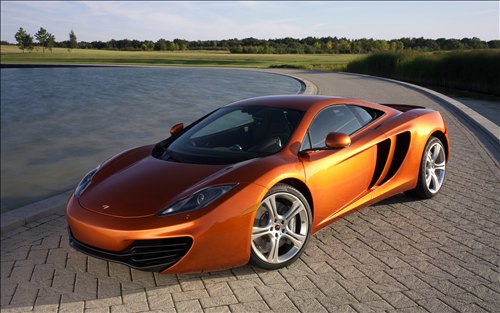
McLaren MP4-12C Wallpaper

McLaren MP4-12C
McLaren MP4-12C
McLaren MP4-12C Wallpaper

McLaren MP4-12C

McLaren MP4-12C Image
McLaren MP4-12C
McLaren MP4-12C
McLaren MP4-12C

McLaren MP4-12C Wallpaper

McLaren MP4-12C
McLaren MP4-12C
McLaren MP4-12C Wallpaper

McLaren MP4-12C

McLaren MP4-12C Image
McLaren MP4-12C
McLaren MP4-12C
McLaren MP4-12C

Thursday, October 28, 2010

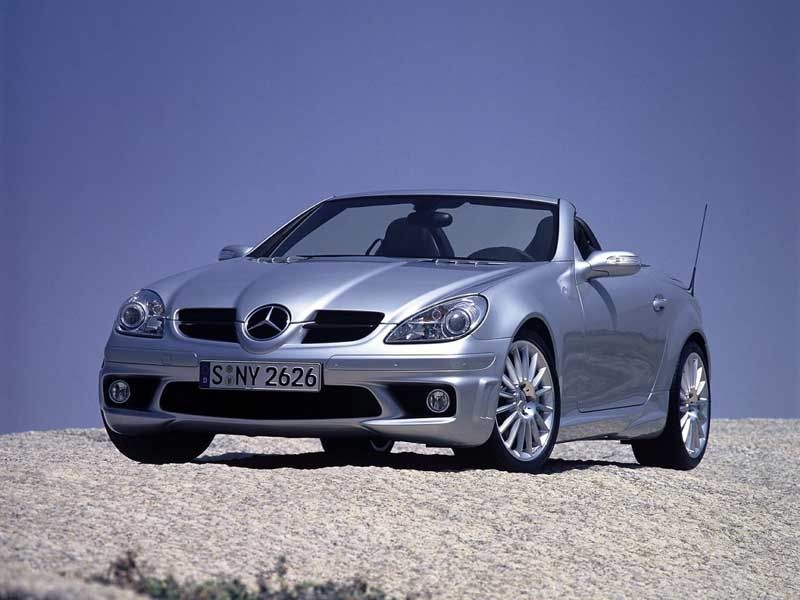
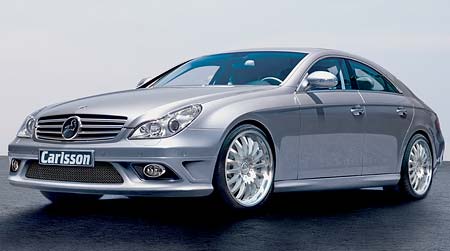
Mercedes Benz Cars Pictures and History

Since its inception, Mercedes-Benz had a reputation for quality and durability. Objective measures looking at passenger vehicles such as JD Power surveys showed a decline in the reputation of this approach in the 1990s and early 2000s. In mid-2005, Mercedes returned temporarily to the industry average for initial quality, a measure of problems after the first 90 days of ownership, according to JD Power. JD Power's Initial Quality Survey for the first quarter of 2007, Mercedes showed dramatic improvement in the escalating 25-5 th place, surpassing quality leader Toyota and earning several awards for its models.

Mercedes Benz
Mercedes Benz
Mercedes Benz Picture
Mercedes Benz

Mercedes Benz
Mercedes Benz
Mercedes Benz
For 2008, Mercedes-Benz initial improvement in the rating for another brand, now in fourth place. In addition to this distinction, which also received the Quality Award for its Platinum Plant Mercedes Sindelfingen, Germany assembly plant. Since 2009, Consumer Reports of the United States has changed its reliability ratings for various Mercedes-Benz vehicles to the "average", and recommending the E-Class and S Class
Mercedes Benz
Mercedes Benz

Mercedes Benz
Mercedes Benz
Mercedes Benz
Mercedes Benz
Mercedes Benz
Mercedes Benz

Mercedes Benz Cars Pictures and History

Since its inception, Mercedes-Benz had a reputation for quality and durability. Objective measures looking at passenger vehicles such as JD Power surveys showed a decline in the reputation of this approach in the 1990s and early 2000s. In mid-2005, Mercedes returned temporarily to the industry average for initial quality, a measure of problems after the first 90 days of ownership, according to JD Power. JD Power's Initial Quality Survey for the first quarter of 2007, Mercedes showed dramatic improvement in the escalating 25-5 th place, surpassing quality leader Toyota and earning several awards for its models.

Mercedes Benz
Mercedes Benz
Mercedes Benz Picture
Mercedes Benz

Mercedes Benz
Mercedes Benz
Mercedes Benz
For 2008, Mercedes-Benz initial improvement in the rating for another brand, now in fourth place. In addition to this distinction, which also received the Quality Award for its Platinum Plant Mercedes Sindelfingen, Germany assembly plant. Since 2009, Consumer Reports of the United States has changed its reliability ratings for various Mercedes-Benz vehicles to the "average", and recommending the E-Class and S Class
Mercedes Benz
Mercedes Benz

Mercedes Benz
Mercedes Benz
Mercedes Benz
Mercedes Benz
Mercedes Benz
Mercedes Benz

Wednesday, October 27, 2010

BMW’s Green Sports Car

BMW Vision EfficientDynamics

“It’s the sports car of the future, the way BMW imagines it.” That’s how Adrian van Hooydonk, director of BMW’s group design, describes the “BMW Vision Efficient Dynamics” two-door concept vehicle to be unveiled at the upcoming Frankfurt Auto Show. Think of it as a showcase of the many fuel-efficient technologies that BMW has in various stages of development. Some of the technologies already appear in production vehicles, while the feasibility of rolling out other systems stretch the future to the point of never.

BMW’s overarching goal was to combine breath-taking speed and groundbreaking efficiency. In the BMW Vision, that boils down to 4.8-second 0-to-60 miles per hour acceleration and 63 mile to the gallon.

BMW Vision EfficientDynamics

First, BMW engineers use the rear-axle to combine a turbo-charged small diesel engine and the mildest forms of hybrid technology. That kind of combo comes standard in BMW 1-series cars in Europe. The Vision's setup is a little more similar to the BMW 320d, also to debut in Frankfurt, which uses a 2.0-liter four-cylinder diesel to deliver 162 horsepower, while promising more than 57 miles to the gallon. The BMW Vision takes it a step further by downsizing the engine to a 1.5-liter three-cylinder diesel engine mated with the more robust hybrid system found in the pricey BMW ActiveHybrid7, expected in the US early next year.

Not satisfied with 162 horsepower, BMW adds a second motor to drive the front wheels exclusively by electricity. When both motors and the diesel engine are called into service, the overall system can put out 356 horsepower. The BMW Vision is lightweight and aerodynamic. The design features an aluminum chassis and suspension, and an outer skin made mostly of polycarbonate glass. The car’s slippery design boasts a drag coefficient of 0.22—beating out the Toyota Prius’s 0.25.

BMW Vision EfficientDynamics

To mitigate the fuel efficiency penalty paid for power, the BMW Vision utilizes plug-in hybrid technology. This is where the Vision becomes more of a fantasy. The combination of diesel and hybrid technologies is widely viewed as cost prohibitive. Adding enough battery power to allow the BMW Vision EfficientDynamics to travel for 30 miles of all-electric drive, as BMW is promising, would send costs through the roof.

BMW also indicates that the Vision only needs a 187-pound 10.8 kWh battery to achieve the 30-mile all-electric goal. To pull that off, the Vision, according to BMW, will discharge the battery pack's capacity by 80 percent, which is likely to significantly reduce the longevity of the battery. (The Chevy Volt will use about 50 percent of its capacity to help ensure a lifetime of use.)

BMW’s Green Sports Car

BMW Vision EfficientDynamics

“It’s the sports car of the future, the way BMW imagines it.” That’s how Adrian van Hooydonk, director of BMW’s group design, describes the “BMW Vision Efficient Dynamics” two-door concept vehicle to be unveiled at the upcoming Frankfurt Auto Show. Think of it as a showcase of the many fuel-efficient technologies that BMW has in various stages of development. Some of the technologies already appear in production vehicles, while the feasibility of rolling out other systems stretch the future to the point of never.

BMW’s overarching goal was to combine breath-taking speed and groundbreaking efficiency. In the BMW Vision, that boils down to 4.8-second 0-to-60 miles per hour acceleration and 63 mile to the gallon.

BMW Vision EfficientDynamics

First, BMW engineers use the rear-axle to combine a turbo-charged small diesel engine and the mildest forms of hybrid technology. That kind of combo comes standard in BMW 1-series cars in Europe. The Vision's setup is a little more similar to the BMW 320d, also to debut in Frankfurt, which uses a 2.0-liter four-cylinder diesel to deliver 162 horsepower, while promising more than 57 miles to the gallon. The BMW Vision takes it a step further by downsizing the engine to a 1.5-liter three-cylinder diesel engine mated with the more robust hybrid system found in the pricey BMW ActiveHybrid7, expected in the US early next year.

Not satisfied with 162 horsepower, BMW adds a second motor to drive the front wheels exclusively by electricity. When both motors and the diesel engine are called into service, the overall system can put out 356 horsepower. The BMW Vision is lightweight and aerodynamic. The design features an aluminum chassis and suspension, and an outer skin made mostly of polycarbonate glass. The car’s slippery design boasts a drag coefficient of 0.22—beating out the Toyota Prius’s 0.25.

BMW Vision EfficientDynamics

To mitigate the fuel efficiency penalty paid for power, the BMW Vision utilizes plug-in hybrid technology. This is where the Vision becomes more of a fantasy. The combination of diesel and hybrid technologies is widely viewed as cost prohibitive. Adding enough battery power to allow the BMW Vision EfficientDynamics to travel for 30 miles of all-electric drive, as BMW is promising, would send costs through the roof.

BMW also indicates that the Vision only needs a 187-pound 10.8 kWh battery to achieve the 30-mile all-electric goal. To pull that off, the Vision, according to BMW, will discharge the battery pack's capacity by 80 percent, which is likely to significantly reduce the longevity of the battery. (The Chevy Volt will use about 50 percent of its capacity to help ensure a lifetime of use.)

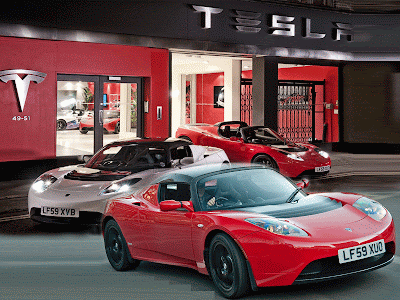
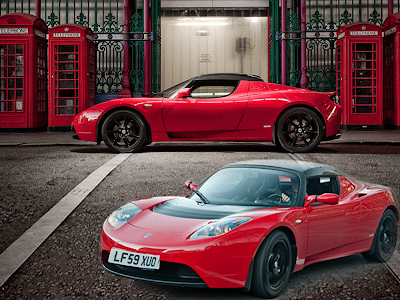
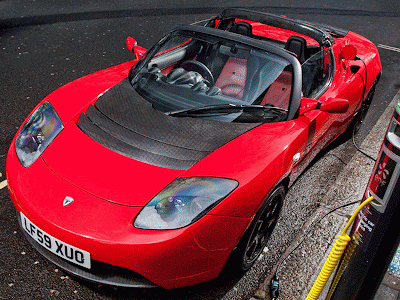
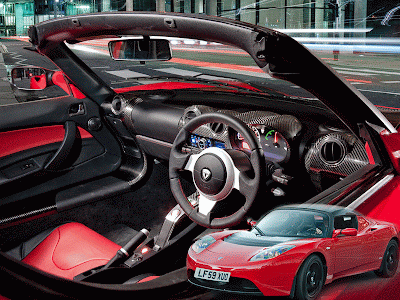
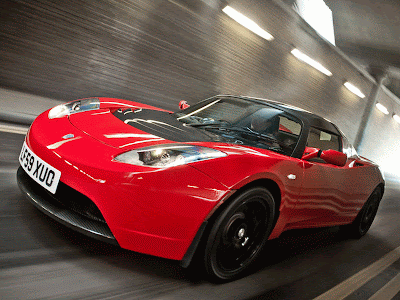
2010 Tesla Roadster Sports Car UK-Version Electric Vehicle

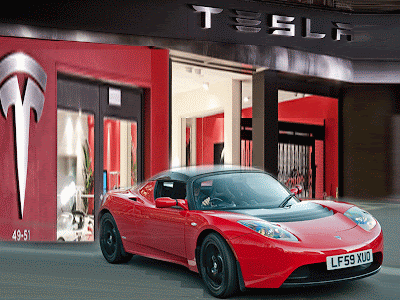
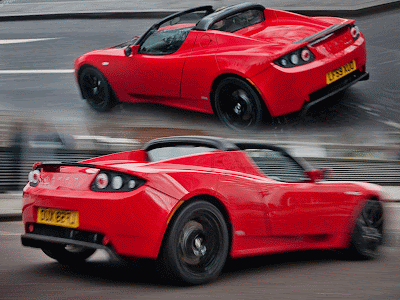
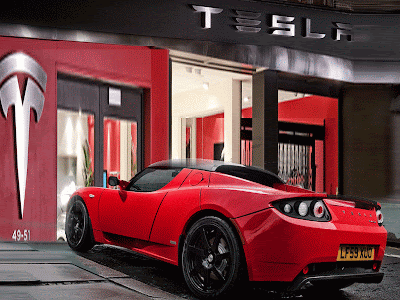
Tesla Motors has announced production of the right-hand-drive version of its iconic Tesla Roadster sports car, the only highway-capable electric vehicle for sale worldwide. The 2010 Tesla Roadster UK-Version includes a suite of unique noise-reduction materials.
2010 Tesla Roadster Sports Car UK-Version Electric Vehicle
Prospective customers and media may test-drive right-hand-drive cars available at Tesla's showroom, 49-51 Cheval Place in London's Knightsbridge district (SW7 1EW). The 2010 Tesla Roadster UK-Version includes a suite of unique noise-reduction materials, an upgraded sound system and other enhancements that make it ideal for daily commuting or weekend drives.
2010 Tesla Roadster Sports Car UK-Version Electric Vehicle
The Tesla Roadster accelerates faster than virtually any other car on the road, making it the only production car faster than a Porsche and twice as energy efficient as a Prius. It is quickly becoming the choice amongst discerning drivers who demand performance with a clean conscience.
2010 Tesla Roadster Sports Car UK-Version Electric Vehicle
The Tesla Roadster easily travels more than 200 miles per charge in mixed driving conditions, consumes no petroleum and plugs into conventional 220-volt sockets throughout Europe. It can be fully or partially recharged by solar or wind power. A customer's Tesla Roadster recently set a world distance record for EVs with 313 miles on a single charge.
2010 Tesla Roadster Sports Car UK-Version Electric Vehicle
"The right-hand-drive model is our response to growing demand from high-performance car buyers in the UK who are also interested in their impact on the environment," said Cristiano Carlutti, Tesla's Vice President for European Sales and Operations. "Tesla is dramatically expanding its retail footprint in Europe, we look forward to building our community of owners and fans throughout the continent."
2010 Tesla Roadster Sports Car UK-Version Electric Vehicle
UK companies that purchase a Tesla Roadster benefit from a 100 percent Writing Down Allowance, meaning they can deduct the price of the car from their taxable profits. The Tesla Roadster is the only sports car that has ever qualified for a such a tax incentive in the UK.
2010 Tesla Roadster Sports Car UK-Version Electric Vehicle
The Tesla Roadster starts at £86,950 and costs about 1.5p per mile, compared to as much as 32p per mile for petro-powered sports cars. Tesla Roadster drivers are do not have to pay the London congestion charge, saving up to nearly £1,700 annually. They can park for free and without time limits in various London boroughs, they get four hours of free charging at certain parking sites, and they are exempt from the forthcoming Showroom Tax of £950.

2010 Tesla Roadster Sports Car UK-Version Electric Vehicle

Tesla Motors has announced production of the right-hand-drive version of its iconic Tesla Roadster sports car, the only highway-capable electric vehicle for sale worldwide. The 2010 Tesla Roadster UK-Version includes a suite of unique noise-reduction materials.
2010 Tesla Roadster Sports Car UK-Version Electric Vehicle
Prospective customers and media may test-drive right-hand-drive cars available at Tesla's showroom, 49-51 Cheval Place in London's Knightsbridge district (SW7 1EW). The 2010 Tesla Roadster UK-Version includes a suite of unique noise-reduction materials, an upgraded sound system and other enhancements that make it ideal for daily commuting or weekend drives.
2010 Tesla Roadster Sports Car UK-Version Electric Vehicle
The Tesla Roadster accelerates faster than virtually any other car on the road, making it the only production car faster than a Porsche and twice as energy efficient as a Prius. It is quickly becoming the choice amongst discerning drivers who demand performance with a clean conscience.
2010 Tesla Roadster Sports Car UK-Version Electric Vehicle
The Tesla Roadster easily travels more than 200 miles per charge in mixed driving conditions, consumes no petroleum and plugs into conventional 220-volt sockets throughout Europe. It can be fully or partially recharged by solar or wind power. A customer's Tesla Roadster recently set a world distance record for EVs with 313 miles on a single charge.
2010 Tesla Roadster Sports Car UK-Version Electric Vehicle
"The right-hand-drive model is our response to growing demand from high-performance car buyers in the UK who are also interested in their impact on the environment," said Cristiano Carlutti, Tesla's Vice President for European Sales and Operations. "Tesla is dramatically expanding its retail footprint in Europe, we look forward to building our community of owners and fans throughout the continent."
2010 Tesla Roadster Sports Car UK-Version Electric Vehicle
UK companies that purchase a Tesla Roadster benefit from a 100 percent Writing Down Allowance, meaning they can deduct the price of the car from their taxable profits. The Tesla Roadster is the only sports car that has ever qualified for a such a tax incentive in the UK.
2010 Tesla Roadster Sports Car UK-Version Electric Vehicle
The Tesla Roadster starts at £86,950 and costs about 1.5p per mile, compared to as much as 32p per mile for petro-powered sports cars. Tesla Roadster drivers are do not have to pay the London congestion charge, saving up to nearly £1,700 annually. They can park for free and without time limits in various London boroughs, they get four hours of free charging at certain parking sites, and they are exempt from the forthcoming Showroom Tax of £950.